
Recessed Lighting: Sizes & Placement Explained


Why Recessed Lighting Matters
Recessed lighting is one of the most commonly used fixtures in modern homes—but it’s also one of the easiest to overdo or place incorrectly. Proper sizing and spacing make the difference between a room that feels bright and balanced versus one that feels harsh, flat, or overly lit. Good recessed lighting should support the room, not dominate it.
Common Recessed Light Sizes
Recessed lights typically come in a few standard sizes. The size you choose affects how wide the light spreads and how noticeable the fixture feels in the ceiling.
4” Recessed Lights
4-inch recessed lights are smaller and more discreet, offering focused, controlled light.

What to expect:
Cleaner, more modern look
More focused light spread
Often used in larger quantities
Best for: Kitchens, bathrooms, hallways, and modern spaces where a subtle appearance is preferred.
5”–6” Recessed Lights
6-inch recessed lights are the most traditional and commonly used size.

What to expect:
Wider light spread
Fewer fixtures needed
More noticeable presence in the ceiling
Best for: Living rooms, bedrooms, basements, and spaces where broader illumination is needed.
Recessed Lighting Placement & Spacing
Proper spacing is just as important as size. Too many lights can feel harsh, while too few leave dark spots.
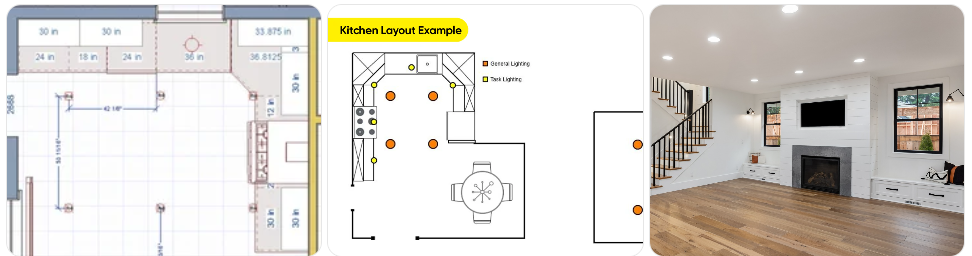
General guidelines:
Space lights roughly half the ceiling height apart (8' ceiling → ~4' spacing)
Avoid placing lights directly over seating areas
Align lights with room features, not just the ceiling
These are starting points, room use and layout always matter more than rules.
Recessed Lighting in Common Rooms
Kitchens
Use recessed lights for ambient lighting
Pair with under-cabinet lighting for task areas
Avoid placing lights directly behind where you stand at counters
Living Rooms
Fewer recessed lights paired with lamps and accent lighting feels warmer
Avoid a rigid grid unless the architecture calls for it
Hallways & Bedrooms
Smaller fixtures spaced evenly work best
Dimmer control is key for comfort
Common Mistakes We See
Using recessed lights as the only light source
Installing too many fixtures
Ignoring furniture placement
Skipping dimmers
Recessed lighting works best when it’s layered with other fixture types.
Our Approach at 1836 Construction Co.
At 1836 Construction Co., we design recessed lighting layouts intentionally, considering ceiling height, room function, furniture placement, and how the space will actually be used. Thoughtful planning ensures lighting feels comfortable, not overwhelming.


Comments