
Cabinet Wood Types Explained: Choosing the Right Material for Your Home
When selecting cabinets, the wood species matters just as much as the finish. Different cabinet wood types vary in appearance, durability, cost, and how well they accept paint or stain. Understanding these differences helps homeowners make confident decisions that align with both design goals and long-term performance. Below is a breakdown of the most common cabinet wood types used in residential construction and remodeling, along with where each one performs best.
Maple Cabinets
Maple is one of the most widely used cabinet woods due to its strength and versatility.
Maple has a tight, subtle grain pattern and a smooth surface, which allows it to perform well with both paint and stain. When stained, maple tends to look clean and uniform, though darker stains can appear blotchy without proper finishing.

Best for:
Painted or lightly stained cabinets
Modern or transitional kitchens
Homeowners wanting durability with a clean look
What to know: Maple is strong and stable, making it a reliable long-term option.
Oak Cabinets (Red Oak & White Oak)
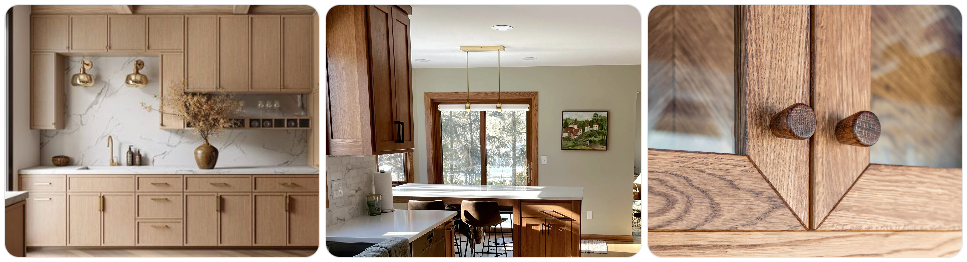
Oak is known for its prominent, visible grain and durability. Red oak has warmer, reddish undertones, while white oak has a more neutral, slightly gray appearance and is currently very popular in higher-end design. Oak takes stain exceptionally well, which makes it ideal for homeowners who want visible grain and texture.
Best for:
Stain grade cabinetry
Traditional, transitional, or modern organic designs
Homeowners who like visible grain
What to know: Oak’s grain will always be visible, even under paint, so it’s rarely recommended for paint grade cabinets.
Alder Cabinets
Alder is a softer hardwood with a smooth texture and natural knots that add warmth and character. It stains easily and often mimics higher-end woods like cherry at a lower cost.
Alder’s natural variation makes it popular for homeowners seeking a more relaxed, organic look.

Best for:
Stain grade cabinets
Rustic, farmhouse, or transitional styles
Spaces where natural variation is welcome
What to know: Because alder is softer, it can dent more easily than maple or oak.
Cherry Cabinets
Cherry is a premium hardwood known for its rich color and smooth grain. Over time, cherry darkens naturally, developing a deeper, warmer tone.
This wood is often chosen for high-end, traditional cabinetry where long-term aging is considered a feature, not a flaw.

Best for:
High-end stain grade cabinetry
Traditional or classic interiors
Homeowners who appreciate natural aging
What to know: Cherry is more expensive and will change color over time with light exposure.
Birch Cabinets
Birch is often used as a cost-effective alternative to maple. It has a fine grain but can vary more in color, especially when stained.
Birch works best with paint or lighter stains where variation is less noticeable.

Best for:
Paint grade cabinetry
Budget-conscious projects
Secondary spaces or utility areas
What to know: Birch can stain unevenly if not finished properly.
MDF (Medium-Density Fiberboard)
MDF is not a solid wood but an engineered material commonly used for paint grade cabinet doors and panels. It provides an extremely smooth surface and resists grain telegraphing through paint.

Best for:
Painted cabinetry
Shaker-style doors
Homeowners wanting the smoothest painted finish
What to know: MDF should not be used in areas exposed to prolonged moisture without proper sealing.
Walnut Cabinets
Walnut is a premium hardwood known for its rich, dark tones and smooth, elegant grain. It naturally ranges from chocolate brown to deep espresso and brings instant warmth and sophistication to a space. Walnut is most often used in contemporary, modern, or high-end transitional designs where cabinetry is a focal point.

Best for:
Stain grade cabinetry
Modern, contemporary, or elevated transitional designs
Feature areas like islands, bars, or statement cabinetry
What to know: Walnut is softer than oak or maple and can dent more easily. It’s also one of the more expensive cabinet woods, often used intentionally in select areas rather than throughout an entire kitchen.
Hickory Cabinets
Hickory is one of the hardest and most durable cabinet woods available. It’s known for its dramatic color variation, ranging from light cream to dark brown—sometimes within the same board. This bold variation gives hickory a rustic, natural look that feels authentic and full of character.

Best for:
Stain grade cabinetry
Rustic, farmhouse, or lodge-style homes
Homeowners who embrace strong natural contrast
What to know: Hickory’s variation is a feature, not a flaw. It’s extremely durable but not ideal for homeowners seeking a uniform or subtle appearance.
How to Choose the Right Cabinet Wood
Choosing the right cabinet material depends on:
Whether the cabinets will be painted or stained
The level of grain visibility you want
Budget considerations
How the space will be used day-to-day
There is no single “best” cabinet wood, only the best choice for your specific design goals and lifestyle.
Our Approach at 1836 Construction Co.
At 1836 Construction Co., we help homeowners understand how cabinet materials affect appearance, durability, and long-term performance. By walking through these decisions early, we ensure selections align with expectations before construction begins.
Clear material choices lead to smoother projects, fewer surprises, and finished spaces that stand the test of time.


Comments