
Quartz vs. Granite: What’s the Difference?


Why This Comparison Matters
Quartz and granite are two of the most popular countertop choices, but they perform very differently. While they can look similar at first glance, the differences in maintenance, appearance, and long-term behavior are important to understand before making a final selection. This guide breaks down those differences so homeowners can choose the option that best fits their lifestyle and design goals.
What Is Quartz?
Quartz countertops are engineered stone, made from crushed natural quartz combined with resins and pigments. This manufacturing process creates a dense, non-porous surface with consistent color and patterning.

Why Homeowners Choose Quartz
Uniform appearance
Non-porous surface
Low maintenance
Wide range of colors and patterns
What to Expect
Quartz does not require sealing and resists staining very well. Because it’s manufactured, patterns are consistent from slab to slab, which many homeowners appreciate for a clean, controlled look.
One thing to note: quartz is not heat-proof, so hot pans should not be placed directly on the surface.
What Is Granite?
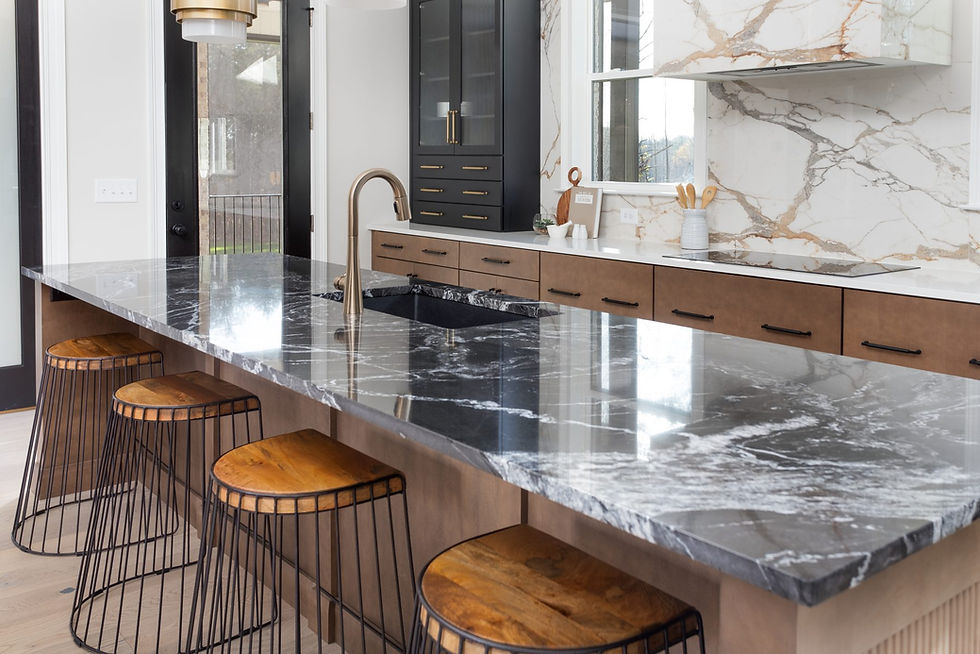
Granite is a natural stone, quarried directly from the earth. Each slab is unique, with natural variation in color, movement, and veining.

Why Homeowners Choose Granite
One-of-a-kind natural beauty
Excellent heat resistance
Strong, durable surface
Natural stone character
What to Expect
Granite is porous and requires periodic sealing to protect against staining. Natural variation is part of its appeal, but it also means seams, color shifts, and movement should be expected, not avoided.
Appearance: Consistency vs. Character
One of the biggest differences between quartz and granite is appearance.
Quartz offers consistency and predictability
Granite offers variation and natural movement
Neither is better, this comes down to whether you prefer a controlled look or organic character.
Maintenance & Care

Quartz
No sealing required
Simple daily cleaning
Resistant to staining
Granite
Requires sealing (typically every 1–3 years)
More forgiving with heat
Needs mindful care with spills
If low maintenance is a priority, quartz often wins. If you don’t mind light upkeep for natural stone, granite performs very well.
Durability & Daily Use
Both materials are durable enough for kitchens and bathrooms, but they behave differently.
Quartz resists chips and stains well but can be damaged by extreme heat
Granite handles heat better but is more susceptible to staining if unsealed
Understanding how your household uses the kitchen helps guide the decision.
Cost Considerations
Pricing for quartz and granite can overlap depending on color, brand, and slab selection. Exotic granite slabs can exceed the cost of quartz, while entry-level granite can be more budget-friendly.
Cost differences often come down to:
Slab selection
Edge profiles
Installation complexity
Which Is Right for Your Home?
Choose quartz if you want:
Low maintenance
Consistent appearance
A modern or clean aesthetic
Choose granite if you want:
Natural stone character
Heat resistance
A one-of-a-kind look
Both are excellent choices when expectations are aligned upfront.
Our Approach at 1836 Construction Co.
At 1836 Construction Co., we help homeowners compare materials early in the design process so selections align with how the space will be used, not just how it looks in a showroom. Clear material decisions upfront lead to fewer surprises and greater long-term satisfaction.


Comments